- The BLUF
- Posts
- The BLUF - February 3rd
The BLUF - February 3rd

Atlas News
February 03, 2026
Good morning everyone,
This is Atlas, and you’re reading the Bottom Line Up Front, where we cover the top geopolitical stories from around the world every Tuesday!
Today’s topics:
Federal Judge Blocks U.S. Attempt To End Temporary Protected Status For Haitians
Trump: India Agrees To New Tariff & Oil Purchase Terms
SpaceX Acquires xAI
Federal Judge Blocks U.S. Attempt To End Temporary Protected Status For Haitians
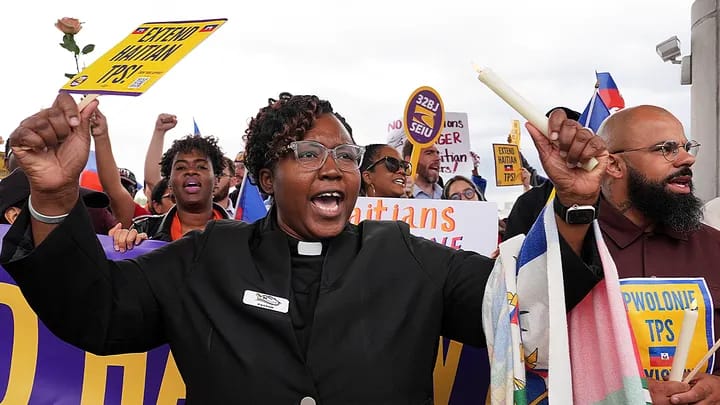
Civilians protesting for protection of Haitians that have legal status. (Lynne Sladky - AP)
By: Atlas
A federal judge on Monday blocked the Trump administration from revoking Temporary Protected Status for more than 350,000 Haitians, halting their potential deportation to a country the U.S. State Department has deemed too dangerous for Americans to visit.
U.S. District Judge Ana C. Reyes issued an 83-page ruling that indefinitely paused the Department of Homeland Security's termination of Haiti's TPS designation, which had been scheduled to expire at 11:59 p.m. Tuesday. The order bars the federal government from invalidating the legal status and work permits of active enrollees and from arresting or deporting them.
"During the stay, the Termination shall be null, void, and of no legal effect," Reyes wrote. "The Termination therefore does not affect the protections and benefits previously conferred by the TPS designation, including work authorization and protection from detention and deportation."
The Department of Homeland Security signaled it would appeal.
"Supreme Court, here we come," Assistant Secretary Tricia McLaughlin said in a statement. "This is lawless activism that we will be vindicated on."
A Rebuke of Noem's Decision
Reyes, who was appointed by former President Joe Biden, issued a forceful critique of Homeland Security Secretary Kristi Noem's decision to end the TPS program for Haitians.
The judge concluded that Noem's termination was "arbitrary and capricious" and violated the Administrative Procedure Act by failing to fully consider "overwhelming evidence of present danger" in Haiti. She found that Noem did not consult with other government agencies as required by federal statute before making her determination.
"The Secretary did not consult," Reyes wrote. "In terminating Haiti's TPS designation without consulting, she acted contrary to law and in excess of statutory authority."
Reyes also found that the decision was rooted "in part" in "racial animus," citing disparaging remarks that both Noem and President Donald Trump have made about Haiti and immigrants. She noted that three days after announcing the end of Haiti's TPS designation, Noem posted on social media referring to nationals of countries in a travel ban as "killers, leeches, and entitlement junkies."
"Kristi Noem has a First Amendment right to call immigrants killers, leeches, entitlement junkies, and any other inapt name she wants," Reyes wrote. "Secretary Noem, however, is constrained by both our Constitution and the APA to apply faithfully the facts to the law in implementing the TPS program. The record to-date shows she has yet to do that."
The judge noted that the five TPS holders who filed the lawsuit are a neuroscientist, a software engineer, a laboratory assistant, a college economics major and a registered nurse.
Conditions in Haiti
Haiti remains one of the most dangerous countries in the Western Hemisphere. Armed gangs control an estimated 95 percent of Port-au-Prince, the capital. Commercial flights from the United States are barred from landing there because gangs have fired military-grade weapons at arriving planes.
The U.S. State Department maintains a Level 4 "Do Not Travel" advisory for the country—its most severe warning.
UNICEF estimated in October that more than 6 million people—over half of Haiti's population, including 3.3 million children—need humanitarian assistance. More than 1.4 million have been displaced by violence.
Reyes cited these conditions in her ruling.
"'Do not travel to Haiti for any reason' does not exactly scream, as Secretary Noem concluded, suitable for return," she wrote.
The Department of Homeland Security had argued in its termination notice that there were "no extraordinary and temporary conditions" in Haiti that would prevent migrants from returning safely. The department contended that ending TPS was in the national interest.
Reyes rejected that reasoning.
"Her 'national interest' analysis focuses on Haitians outside the United States or here illegally, ignoring that Haitian TPS holders already live here, and legally so," the judge wrote.
History of TPS for Haiti
Temporary Protected Status is a federal program that allows foreigners to remain in the United States when conditions in their home countries—such as war, natural disasters or political instability—make return unsafe. It provides eligible migrants with work authorization and protection from deportation.
President Barack Obama designated Haiti for TPS in 2010 after a magnitude-7.0 earthquake killed more than 300,000 people and left 1.5 million homeless. The status has been extended repeatedly as Haiti faced additional natural disasters, the assassination of President Jovenel Moïse in 2021, and escalating gang warfare.
The Biden administration most recently extended TPS for Haitians in July 2024, citing "simultaneous economic, security, political, and health crises" fueled by gangs and the absence of a functioning government.
Shortly after Trump returned to office, Noem moved to truncate the Biden-era extension so it would expire in August 2025. A federal judge in New York ruled in July that she lacked statutory authority to do so. Her department then announced in November that it would terminate Haiti's TPS designation entirely, setting the February 3 deadline.
Trump tried to end TPS for Haitians during his first term as well, but legal challenges prevented the policy from taking effect before he lost re-election in 2020.
What Comes Next
The Trump administration has moved to dismantle TPS programs for about a dozen countries, including Venezuela, Nicaragua, Ethiopia, South Sudan and Myanmar. Officials argue the programs have been abused and extended for too long, and that they attract illegal immigration.
"Haiti's TPS was granted following an earthquake that took place over 15 years ago," McLaughlin said. "It was never intended to be a de facto amnesty program, yet that's how previous administrations have used it for decades. Temporary means temporary."
The ruling provides immediate relief to Haitians who had been preparing for the worst. In Springfield, Ohio, where an estimated 12,000 to 15,000 Haitians live, parents had been securing passports for their U.S.-born children and signing power-of-attorney documents in case they were detained or deported.
Lynn Tramonte, executive director of the Ohio Immigrant Alliance, called the decision a welcome reprieve but warned that uncertainty remained.
"People can't live their lives like this, pegging their families' futures to a court case," she said.
Attorneys for the plaintiffs said they would continue fighting if the government appeals.
"Haiti remains an extraordinarily dangerous place, marked by widespread gang violence, rampant disease, lack of access to clean drinking water, severe housing instability, and the absence of a functioning government," lawyers Geoff Pipoly and Andrew Tauber said in a statement. "This ruling recognizes the grave risks Haitian TPS holders would face if forced to return."

Subscribe to the BLUF to read the rest.
Delivered Tuesday, get insights into the most pressing geopolitical issues from an intelligence perspective. Stay ahead of the curve with a comprehensive look at the top stories around the world and their implications for you.
Already a paying subscriber? Sign In.
A subscription gets you:
- • Lifetime Rizz
Reply