- The BLUF
- Posts
- The BLUF - May 19th
The BLUF - May 19th

Atlas News
May 19, 2026
Good morning everyone,
This is Atlas, and you’re reading the Bottom Line Up Front, where we cover the top geopolitical stories from around the world every Tuesday!
Today’s topics:
Maduro Ally Deported, Faces U.S. Charges For Money Laundering
Trump Gives Another Hold Off On Iran Attacks Due To Negotiation Progress
$10 Billion IRS Lawsuit Dropped By Trump, $1.7 Billion Dollar Fund Setup For ‘Victims Fund’
Maduro Ally Deported, Faces U.S. Charges For Money Laundering
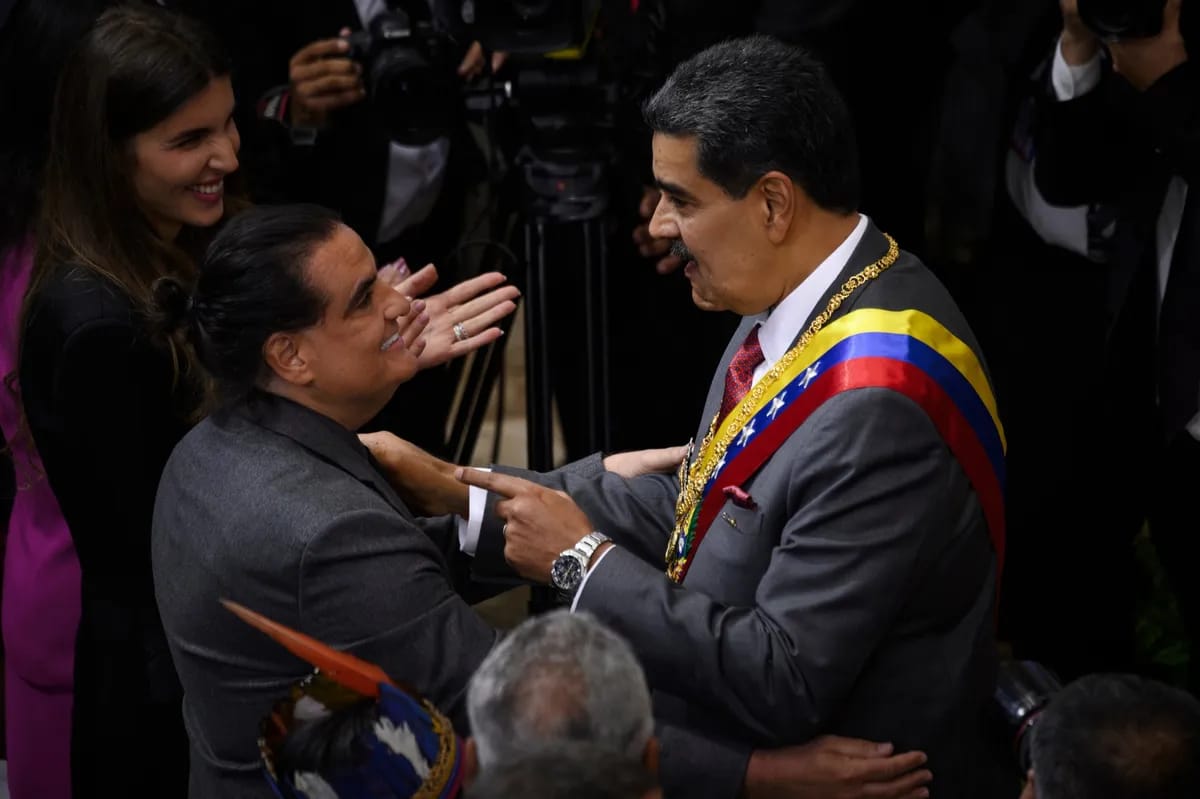
Alex Saab with Nicolas Maduro at the National Assembly in Caracas in 2024. (Bloomberg)
By: Atlas
Alex Saab, the Colombian businessman who served as Nicolás Maduro's chief financial operator for years, appeared in federal court in Miami on Monday after being deported from Venezuela over the weekend and re-indicted on money laundering charges.
Saab, 54, arrived at Opa-locka Airport on Saturday and was held at the Federal Detention Center. Shackled and dressed in a beige prison uniform, he answered "Yes, ma'am" in English when Magistrate Judge Marty Fulgueira Elfenbein asked whether he understood the charge against him: a single count of conspiracy to launder monetary instruments, carrying a maximum sentence of 20 years.
His defense attorneys, Neil and Joseph Shuster, told the court they expect to continue representing him. Federal prosecutors are led by Assistant U.S. Attorney Monique Botero of the Southern District of Florida and Deputy Chief Joseph Palazzo of the Justice Department's Money Laundering, Narcotics and Forfeiture Section.
Acting Attorney General Todd Blanche said Saab "will be prosecuted and held fully accountable under U.S. law." Assistant Attorney General A. Tysen Duva of the Criminal Division said Saab "allegedly used American banks to launder hundreds of millions of dollars stolen from a Venezuelan food program meant for the poor and proceeds from the illegal sale of Venezuelan oil."
The CLAP Scheme and Stolen PDVSA Oil
The indictment accuses Saab of conspiring with others to bribe senior Venezuelan officials in order to secure contracts under the Comité Local de Abastecimiento y Producción, or CLAP — a state food program Maduro set up during the country's hyperinflation crisis to deliver subsidized rice, corn flour, and cooking oil to poor Venezuelans.
Prosecutors allege Saab and his co-conspirators used shell companies, fraudulent invoices, falsified shipping records, and kickback payments to misrepresent the source of the food, claiming imports from Colombia and Mexico while skimming hundreds of millions of dollars off the top. Portions of the proceeds moved through accounts at U.S. banks.
The Justice Department says the scheme expanded after 2019, as American sanctions choked Venezuelan exports and squeezed Caracas's ability to pay its foreign obligations — including payments to Saab. Exploiting their access inside the government, the indictment alleges, the conspirators tapped billions of dollars' worth of crude oil owned by state-run Petróleos de Venezuela, S.A., or PDVSA, and sold it under false pretenses. The proceeds were then routed through U.S. accounts to keep the CLAP scheme running.
U.S. Attorney Jason A. Reding Quiñones said "the defendant used bribery, shell companies, and fraudulent documents to siphon hundreds of millions of dollars for personal gain," adding that Saab remains presumed innocent.
Cape Verde, the Biden Pardon, and a Cabinet Seat
Saab has been on the U.S. radar for the better part of a decade. He was first indicted in 2019, during the first Trump administration, over a separate scheme involving a Venezuelan low-income housing contract. He was detained in Cape Verde in June 2020 while his plane stopped to refuel en route to Iran on what Venezuela called a high-level humanitarian mission. After a lengthy legal battle, Cape Verdean courts approved his extradition, and he was transferred to Miami in October 2021.
In December 2023, President Joe Biden granted Saab clemency as part of a prisoner exchange that freed 30 detainees in Venezuela, including 10 Americans, along with a fugitive foreign defense contractor. The pardon was tied to that earlier housing case. Republicans and federal law enforcement officials criticized the deal, and investigators kept building separate cases over the CLAP program and other dealings.
Back in Caracas, Maduro embraced Saab publicly and, in October 2024, appointed him Minister of Industry and National Production. His political rehabilitation lasted until the early days of 2026.
On January 3, U.S. military forces captured Maduro in a raid in Caracas. Within weeks, then-Vice President Delcy Rodríguez took over as acting president. She stripped Saab of his cabinet seat, removed him from his role overseeing foreign investment, and dismissed his wife, Camilla Fabri, from her post as deputy minister for international communication. Saab was arrested in Caracas in February in a joint U.S.-Venezuelan operation.
Caracas Defends the Deportation
Venezuela's constitution prohibits the extradition of its citizens, so the Rodríguez government framed Saab's removal as a deportation of a foreign national. The Administrative Service for Identification, Migration and Foreigners Affairs, known as SAIME, said in a statement Saturday that Saab was being sent away because he was "involved in the commission of various crimes in the United States of America."
Interior Minister Diosdado Cabello defended the move on Monday by arguing that Saab's Venezuelan identification card, issued in 2004, "is not legal" and that records do not show him as a Venezuelan citizen. "He presented himself with a fraudulent ID card," Cabello told reporters.
The framing is a sharp turn from Rodríguez's past statements. While Saab was held in U.S. custody between 2021 and 2023, she publicly described him as an "innocent Venezuelan diplomat" who had been "kidnapped" while on a humanitarian mission. Pro-government commentator Mario Silva, removed from state television shortly after Maduro's capture, said in a Sunday livestream that the deportation violated the constitution's extradition ban: "Nobody is safe right now."
The Trump administration has heaped praise on Rodríguez, who has reopened Venezuelan oil fields to U.S. investment at a time of high prices tied to the Iran war. In exchange, the White House has stopped pushing for the constitutionally required election that should have followed Maduro's removal.
A Possible Witness Against Maduro
U.S. officials have long described Saab as Maduro's "bag man" — the financial operator who managed payments, foreign contracts, and overseas investments for the regime. Court filings have previously revealed that Saab secretly met with the Drug Enforcement Administration before his 2020 arrest and helped American investigators map corruption inside Maduro's inner circle. He forfeited more than $12 million in illegal proceeds as part of that earlier cooperation.
He could now be useful again. Maduro and his wife, Cilia Flores, are in U.S. custody in New York awaiting trial on conspiracy to commit narcoterrorism and import cocaine. Both have pleaded not guilty. Ernesto Ackerman of the Independent Venezuelan American Citizens Organization said Saab "built the whole system" and is likely to bring additional Venezuelan officials into the frame if he cooperates.
The pressure also reaches figures still inside Venezuela. Cabello himself is under U.S. indictment, accused of ties to the Cartel de los Soles. Media businessman Raúl Gorrín, owner of Globovisión, was charged in 2024 with conspiring to launder $1.2 billion. For now, Saab will remain in federal custody. Prosecutors have not announced a date for his next court appearance.

Subscribe to the BLUF to read the rest.
Delivered Tuesday, get insights into the most pressing geopolitical issues from an intelligence perspective. Stay ahead of the curve with a comprehensive look at the top stories around the world and their implications for you.
Already a paying subscriber? Sign In.
A subscription gets you:
- • Lifetime Rizz
Reply